
Expanding South Africa’s conservation footprint
Photo Credit: Birdlife South Africa
South Africa is working towards an ambitious global conservation commitment: protecting and conserving 30% of its terrestrial, freshwater and marine environments by 2030. Known as the 30 × 30 target, it is part of target 3 of the Global Biodiversity Framework that recognises both formally protected areas and a growing range of other effective area-based conservation measures (OECMs).
‘OECMs are essentially a less onerous, internationally recognised form of conservation commitment to assist South Africa in working towards achieving the target,’ says BirdLife South Africa’s Steve McKean, who manages a 3-year project that is aimed at rolling out OECMs in South Africa and is funded by the WWF Nedbank Green Trust.
‘We are identifying, assessing and helping to prepare potential OECMs for recognition across the country that demonstrate significant biodiversity value,’ McKean explains. ‘We currently have 46 pilot sites across 6 provinces collectively spanning ±329 000 ha, including 4 marine sites spanning ±120 000 ha and 11 communal areas spanning 42 000 ha. This is just the start.


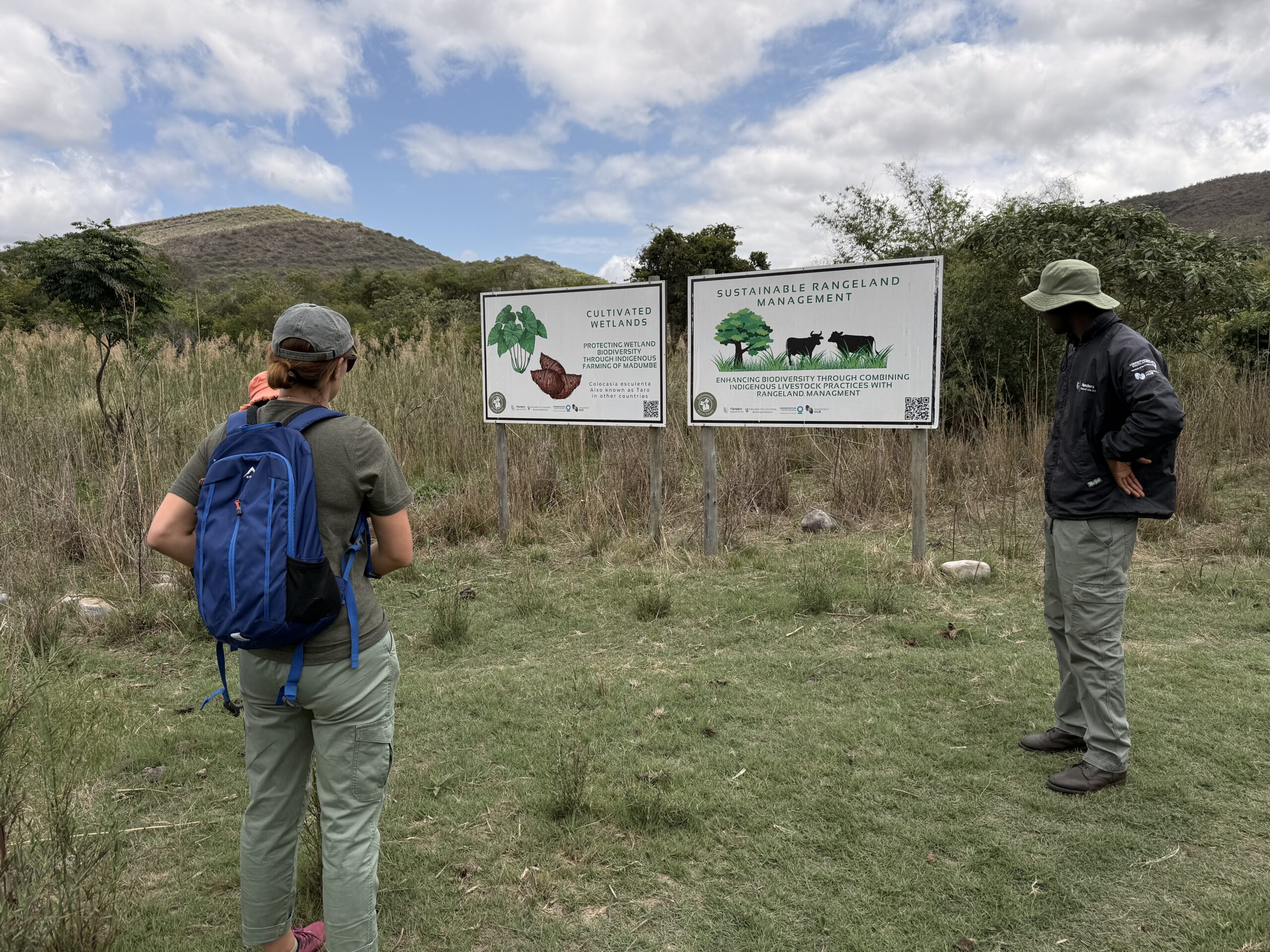

‘The approach creates an opportunity to bring a much wider range of landowners and communities into South Africa’s conservation landscape. We are also holding workshops to develop the capacity of provincial and municipal authorities, conservation organisations, and other stakeholders to participate in the process.’
OECMs can be recognised on many different types of land use, including privately owned farms, community land, agricultural landscapes, timber plantations, housing estates containing significant natural areas and traditional sacred sites. Recognising and reporting OECMs in marine environments is also critically important. OECMs cannot be formally declared protected areas under the National Environmental Management: Protected Areas Act, 57 of 2003.
Finalising national OECM norms and standards
South Africa’s draft OECM norms and standards have undergone public consultation, with conservation organisations including BirdLife South Africa and WWF South Africa contributing to the process in February this year. Finalisation is anticipated once the national framework has been approved, hopefully early in 2027.
For a site to be recognised and reported as an OECM, it needs to have conservation value. This can include one or more of the following: threatened species and their breeding or feeding grounds, threatened ecosystems, ecological corridors, significant ecosystem services or areas that are under-represented in existing protected-area networks, or an intact and well managed natural area. Additional qualifying criteria include whether the area falls within a key biodiversity area (KBA), important marine mammal area (IMMA), important shark and ray areas (ISRA), estuarine functional zone, or strategic water source area (SWSA).
‘For example, a globally threatened species like Botha’s Lark occurs in our threatened high-altitude grasslands,’ McKean explains. ‘These areas would benefit from OECM status. In this case, Botha’s Lark is a flagship species for a threatened landscape. There are many other examples of birds, animals, and plants that serve as flagship species across our provinces.’
‘This broader approach is increasingly necessary as South Africa faces mounting pressures from climate change, unsustainable development, and biodiversity degradation,’ says Poovi Pillay, Executive Head of Nedbank’s Social Impact Unit. We need healthy ecosystems for freshwater, oxygen, food production, pollination, soil quality and climate regulation – services on which communities and economies depend. If South Africa fails to meet its commitments under the CBD, we could face serious disruptions of these essential services.’
From pilot to national scale
The project builds on an earlier WWF Nedbank Green Trust-supported initiative in the Western Cape, where 20 potential OECM sites were assessed. Eight met all the criteria and are ready to be reported once national norms and standards have been finalised.
OECM implementation training workshops have been held in KwaZulu-Natal, the Eastern Cape, Limpopo and Gauteng, with training planned across all 9 provinces.
Working with 3 biosphere reserves
The project is also working with 3 biosphere reserves, training management teams to assess potential OECMs and gather the evidence required to demonstrate their biodiversity value.
In the Kruger 2 Canyons Biosphere, which stretches across 2.6 million hectares of private and communal land between Limpopo and Mpumalanga, 5 potential sites have been identified. These include SWSAs, threatened ecosystems, and areas important for connecting with other important conservation areas, as well as wildlife estates supporting critically endangered species such as the white-backed vulture.
In Limpopo’s Vhembe Biosphere, 5 sites covering approximately 74 000 hectares have been identified. They include threatened forests, high-altitude grasslands, and peat-bearing mountain wetlands that play important roles in water regulation and carbon storage.
‘In the Western Cape, the Gouritz Cluster Biosphere, which spans 3.2 million hectares, we have assessed 3 sites covering 2000 hectares: a private game reserve; a private farm with endangered fynbos and mammal species; and an estuary near Mossel Bay that is a very important fish nursery and waterbird sanctuary,” says McKean. ‘Our country’s estuaries are highly threatened and tricky to conserve as their governance specifications are not clear, including, for example, no clear mandate as to whether they extend to the high or low water mark.’
Marine OECMs in general are complex, McKean explains, as they often lack clear boundaries. One that does have clear boundaries is the penguin island closures, but there are other complexities associated with these, such as governance structures and what constitutes ‘long-term’ conservation. “So far, we’ve included marine areas as part of the training workshops with provincial agencies and supporting NGOs in KwaZulu-Natal and the Eastern Cape. We aim to identify at least one marine area in each coastal province for OECM recognition and reporting, guided by WWF’s Marine OECM roadmap titled ‘Securing ocean biodiversity in South Africa | WWF South Africa’.
Recognition can create opportunities
Although there are no guarantees, formal OECM recognition could create a range of opportunities, including future funding, employment, and opportunities for potential carbon-credit benefits for communities and landowners. It can also strengthen the conservation credentials and market positioning of agricultural enterprises and private game reserves.
For communities concerned about threats such as mining, recognition could help ensure that biodiversity values are more clearly considered during environmental impact assessment processes.
Another challenge is capacity. Provincial conservation agencies and the national Department of Forestry, Fisheries and the Environment face budget and staffing constraints, which raises questions about who will monitor and support OECMs once they have been recognised.
‘A key challenge for all the OECMs is determining who will support and monitor them,’ McKean says. He believes the NGO sector will need to work alongside government entities to address this capacity gap. The challenge now is to turn this growing network of potential conservation areas into a lasting, connected and effectively managed contribution to South Africa’s biodiversity future.
Ends.