
The Communities Around Hluhluwe-Imfolozi Aren’t Just Neighbours To Conservation – They’re at the heart of it
Photo Credit: Heather Dugmore
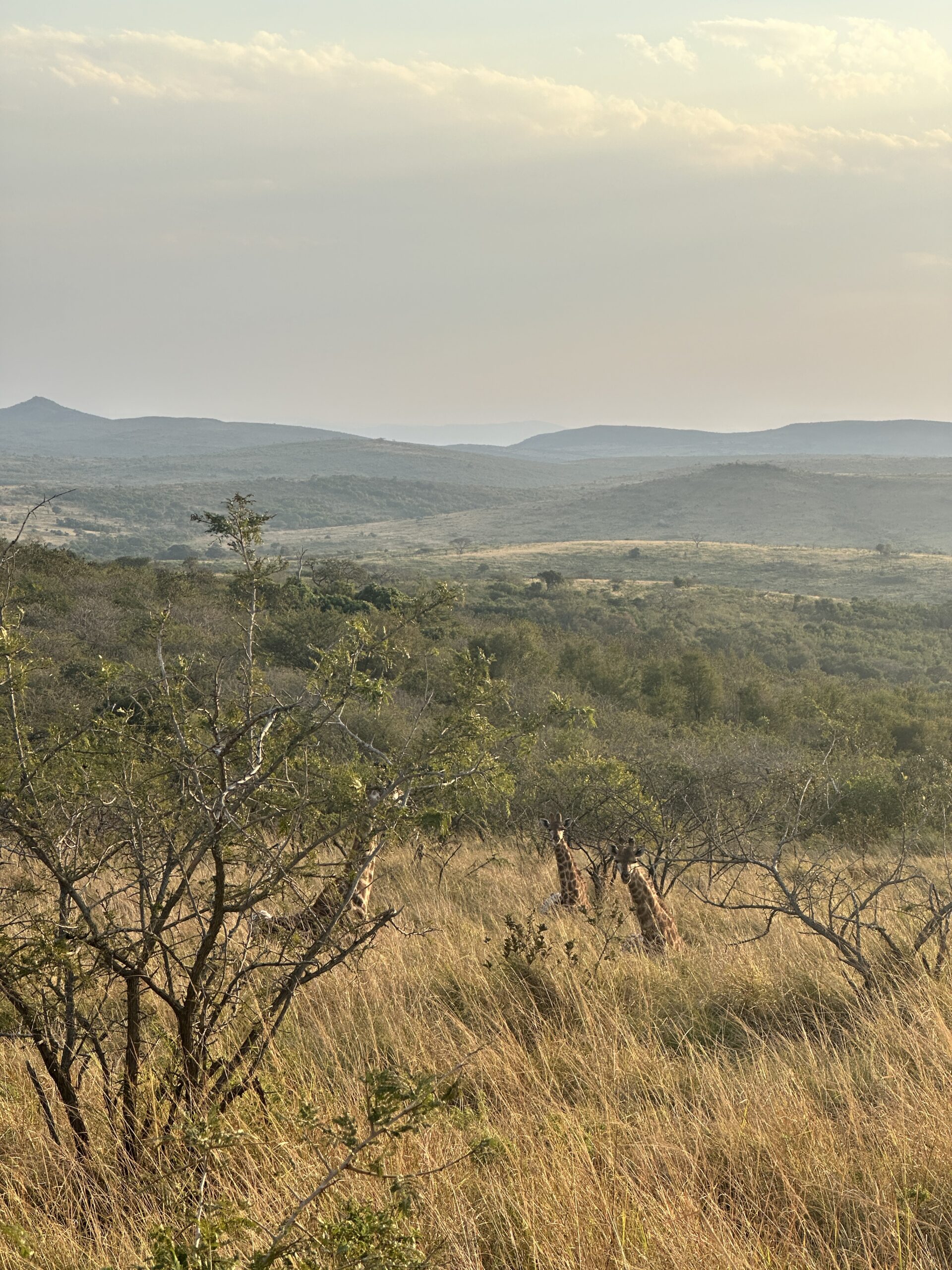
Drive into the villages surrounding Hluhluwe-iMfolozi Park in northern KwaZulu-Natal, and the boundary between “reserve” and “community” barely registers. Cattle, goats, and crops are very intimate neighbours with the lions, hyaenas, and elephants roaming just over the rise. In Mvutshini village, Jabulani Nkwanyana supervises the community conservation monitors who patrol this in-between space, watching for animals that have pushed through the fences and could put people, livestock, or livelihoods at risk.
The monitors are, in Nkwanyana’s words, the eyes and ears on the ground. When an elephant breaches a section of fence, or lion tracks turn up outside the park boundary, they’re the ones who spot it first, using EarthRanger’s real-time tracking to pin the exact location so park officers can respond before any damage is done. It matters that the monitors are drawn from these communities themselves. People already recognise them, which makes the whole early-warning system work faster and with less friction.
This is not a volunteer patrol. It’s a paid, structured role inside a 3-year WWF Nedbank Green Trust project – the Human-wildlife Coexistence, Cooperation, and Economic Integration Project, running since June 2024. And it points to something conservation planning still struggles to admit: the people best placed to protect Africa’s oldest proclaimed wildlife reserve aren’t visiting researchers or head-office strategists. They’re the ones who live beside it.


What’s actually at stake
The pressure on Hluhluwe-iMfolozi comes from every direction at once. A growing population, high unemployment, and mining activity closing in around the park’s edges. Driving back from the villages, it’s hard to miss the scale of the Somkhele anthracite mine, which sits close to the White Umfolozi River, a key freshwater source for the whole region. The risk mining poses to that water isn’t hypothetical; it’s active, and largely outside the park’s own control.
Layer onto that the economics: average household size among programme participants runs to 11 or 12 people, sustained by an average income of around R5,590 a month, of which roughly R4,000 typically comes from social grants. For families operating at that margin, a degraded landscape isn’t an abstract loss. It’s the difference between an income source and none at all.
Two sides of one intervention
The project treats wildlife monitoring and small-business development as one integrated system, not two initiatives sharing a budget line. Wildlife ACT runs the coexistence and monitoring side and has, for the past 17 years, worked alongside Ezemvelo KZN Wildlife, which manages the HiP. Priority species they help monitor and manage include rhino, vulture, lion, African wild dog, leopard, cheetah, and hyena.
People Nature Connect runs the livelihoods side, working with 40 small-business owners across the surrounding villages. Spaza shops, sewing and beadwork, crop and livestock farming, school-feeding suppliers, and poultry are the most common choices given their low start-up cost and steady local demand. Mrs Nomali Thwala, one of the participants, raises and sells chickens for exactly that reason.
Neither half of the project works as well without the other. A monitoring network with no economic alternative on offer is just surveillance dressed up as conservation. Livelihood support with no monitoring layer leaves the underlying pressure on the park unaddressed. Put together, “protect the reserve” and “support the community” stop competing for the same funding and start being the same sentence. And there are early signs it’s working: one of HiP’s own community conservation officer has noted that these NGO partnerships have helped reduce complaints and protests from neighbouring communities, partly by getting to the truth faster when livestock deaths are wrongly blamed on wildlife.
Why the women in this programme are the real story
Of the 40 business owners in the programme, 87% are women and 35% are youth. That’s not a diversity footnote; it’s the design decision that makes the model work. In rural KwaZulu-Natal, where migrant labour and social grants are often the main sources of income, women are typically the ones managing household budgets and absorbing economic shocks day to day. Put real economic opportunity directly in their hands, tied to a landscape they have every reason to want thriving, and the result is a far more durable form of conservation buy-in than any awareness campaign could produce.
Communities as custodians, not beneficiaries
Conservation communications default to a familiar frame: communities as beneficiaries, receiving training, support, the trickle-down of a well-funded project. WWF’s Nomonde Mxhalisa, Marketing and Communications Manager of the Green Trust, frames it differently. The goal, she says, is for communities to become custodians of their own ecosystems and landscapes. People with a direct, daily stake — as owners and stewards, not just neighbours — in whether a landscape survives, who are already doing the work of protecting it, often before any funding conversation begins.
That reframing matters well beyond one reserve. If conservation in South Africa is going to hold against mounting pressure – from mining, from unemployment, from climate stress on freshwater systems – it will be because models like this one get taken seriously as the template, not the exception. Awareness was never the shortage. Investment in the people already doing the work is.