
Tackling the nappy pollution crisis
Photo Credit: WWF
When you see our rivers and surrounding areas piled high with refuse, including a frightening amount of disposable nappies, you immediately understand the critical need for a national initiative to address the accelerating nappy pollution crisis.
Towards achieving this, a project called Smart Nappy is being implemented in rural Matatiele in the Eastern Cape by Environmental & Rural Solutions (ERS), a long-standing non-profit organisation in Matatiele, with support from the WWF Nedbank Green Trust.
‘Smart Nappy is the term we use for the beautifully designed, technically advanced, cost-effective, reusable nappies produced by several brands, including our South African project partner, BiddyKins,’ says Amanda Kalaku, Project Manager for Smart Nappy and Catchment Convenor for ERS. ‘The Smart Nappy project is part of a broader focus on catchment and freshwater conservation, regenerative farming and livelihoods. It makes absolute sense for mothers, grandmothers and carers of babies to change to reusable nappies, but it takes a lot of time and effort to try to change behaviour.’

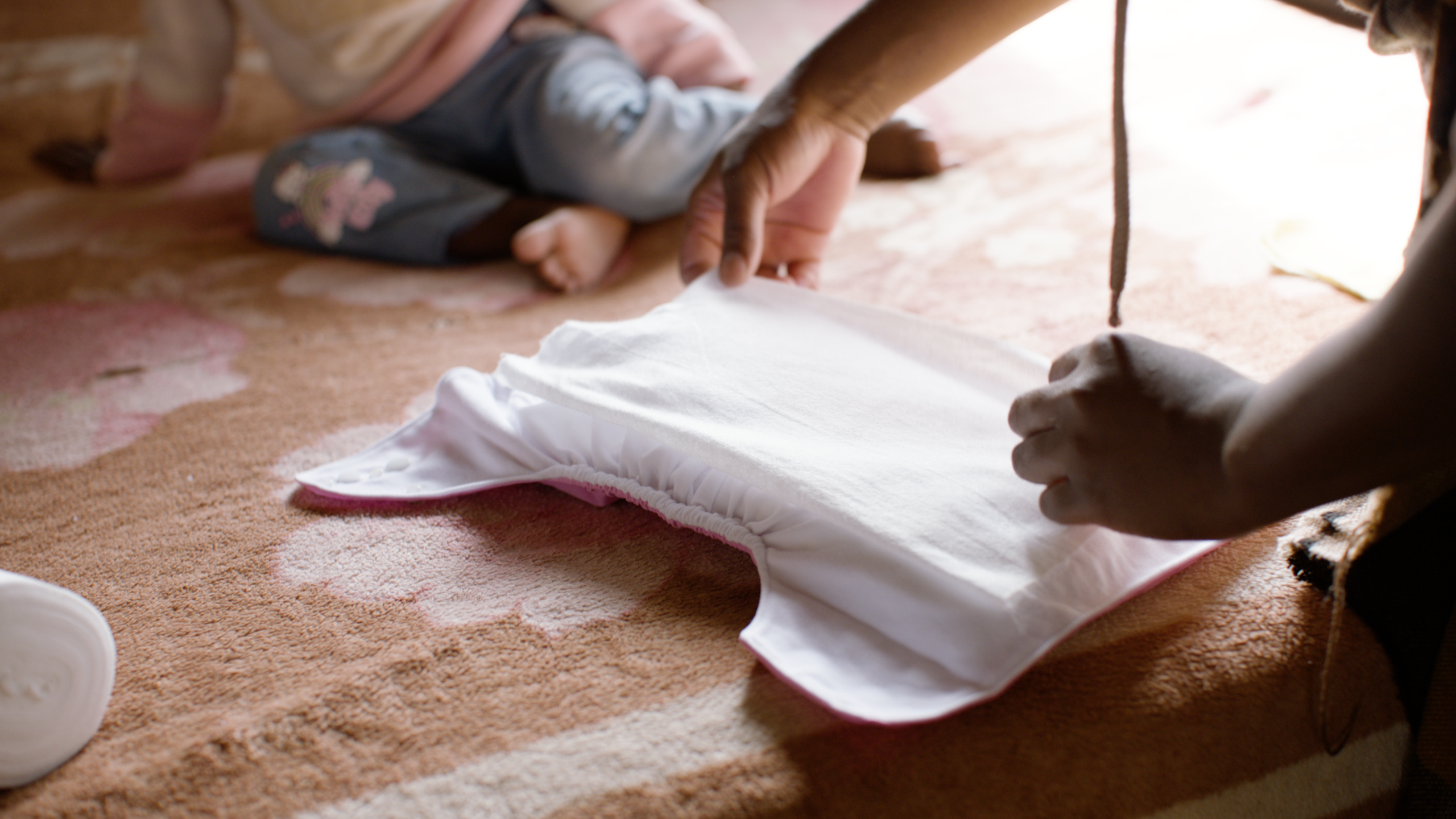


Grandmothers are far more open to reusable nappies, whereas the younger mothers say disposable nappies are convenient and that while they know they cost more, they don’t like to wash nappies. ‘We show them that the Smart Nappy is nothing like the old-fashioned cloth nappies of days gone by. These nappies are incredibly easy to use, comfortable and well-fitting, and require minimal water and washing. This helps to keep the rivers and springs where they get their drinking and household water clean.’
A survey of 504 homes in two pilot areas in the rural villages around Matatiele, which has a population of 225 000 people was undertaken by ERS in collaboration with the University of the Western Cape’s National Research Foundation Chair in Waste & Society. The survey was supported by the WWF Nedbank Green Trust and revealed that 100 000 disposable nappies per day and over 1000 tonnes of nappy waste (200 soccer fields) per year are discarded in the surrounding environment and streams.
As with most rural areas, 75% of the villages are underserviced and have limited refuse removal services. In Matatiele this is despite the efforts of the local municipality, which does not have the resources to cover the huge rural footprint with no formal road network. The only solution is to reduce the number of disposable nappies and refuse polluting the environment and Matatiele’s Umzimvubu river catchment, which is one of South Africa’s strategic water source areas.
‘We started supporting the Smart Nappy project in 2021, after seeing the outcomes of testing the reusable nappies with 8 mothers with a grant provided to ERS by the nonprofit