
Urgency for an Integrated Energy Plan for South Africa
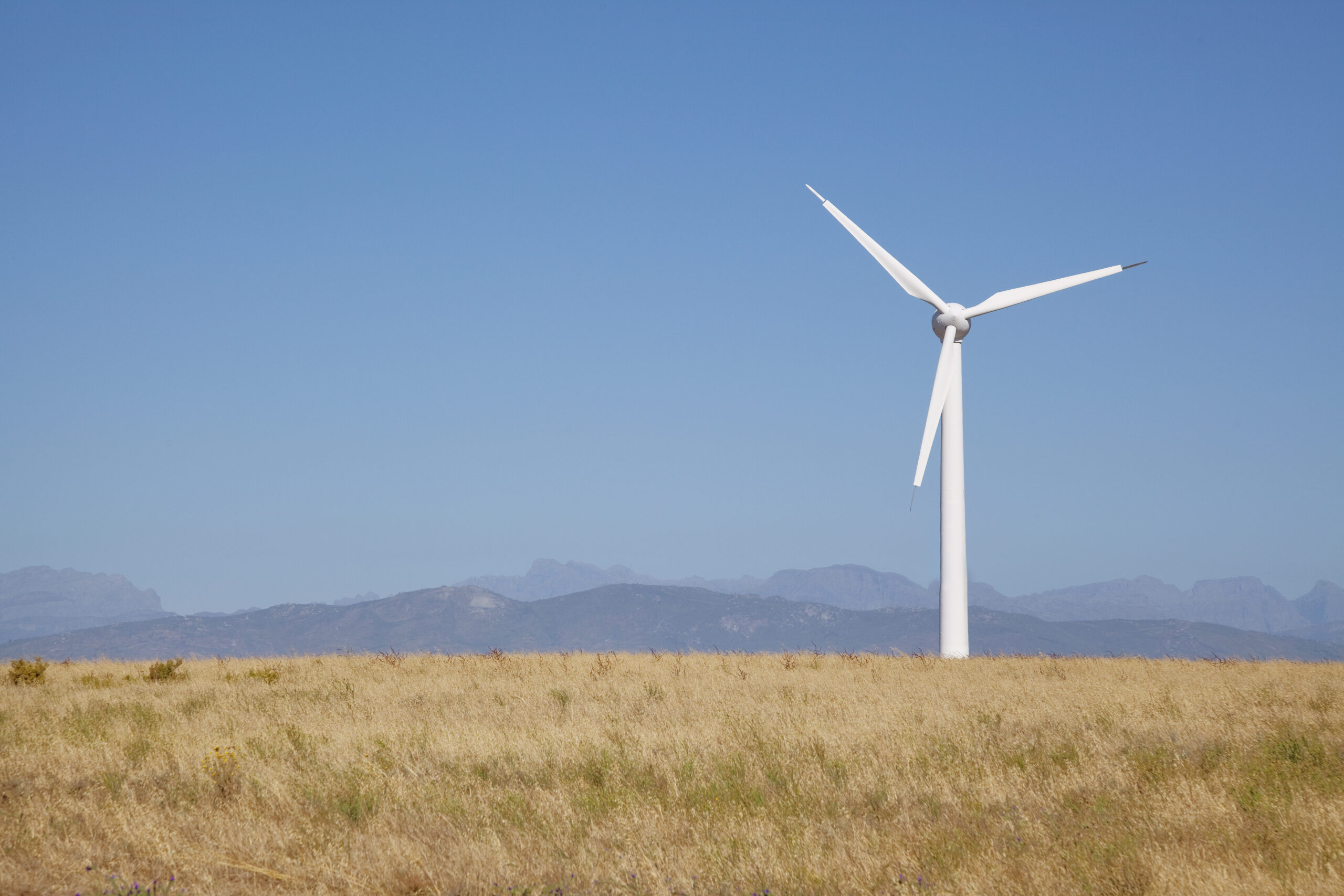
Photo Credit: WWF
The energy choices made in South Africa today will have long-term effects on the structure and performance of the energy system. Capital-intensive infrastructure and new investments, whether in refineries, public transport, or distributed renewables, shape costs, emissions, patterns of energy access, employment and economic inclusion for decades to come.
This highlights the urgency of integrated energy planning that accounts for both near-term constraints and long-term consequences.
While the government’s overarching energy strategy – the Integrated Energy Plan (IEP) – is yet to be released, WWF South Africa has published a substantial IEP policy report, which it has made freely available to government to support the development of the national IEP.
Titled Informing an Illustrative People’s Energy Planning (IPEP) Process, WWF’s report was launched at the National Business Initiative Climate Change Summit on 24 November 2025. https://wwfafrica.awsassets.panda.org/downloads/esrg_ipep_final-technical-report_1.pdf



‘With funding from the WWF Nedbank Green Trust, the IPEP was developed over 2 years in partnership with a technical research team – the Energy System Research Group (ESRG) from the University of Cape Town (UCT) – and a steering committee that included independent climate specialists and representatives from labour, academia, non-governmental organisations, industry and government,’ says Khabonina Masango, WWF’s Climate and Energy Specialist and manager of the IPEP initiative.
‘It included numerous consultations with South African trade unions as we prioritise equity, job security, job creation, localisation and inclusion. This includes the required job transition from carbon-intensive energy sectors such as coal and gas to alternative and renewable sources such as hydrogen, solar, and wind.’
In terms of the National Energy Act, 34 of 2008 (NEA), all energy policies in South Africa must be guided by a national IEP that considers the country’s long-term trajectory. ‘It is of national concern that the Department of Electricity and Energy (DEE) has not produced a final IEP for the past 23 years,’ says James Reeler, WWF’s Senior Manager for Climate Action. ‘This means that since 2003, the energy subsectors, including coal, oil and gas, nuclear, and renewables have each been developing their own roadmaps without an overarching governing policy.’
Masango explains: ‘WWF’s IPEP offers government and society an exemplar energy plan while also plotting a net-zero pathway for the country’s energy supply by 2050. Net zero refers to the balance between the carbon emissions produced and the amount removed from the atmosphere.’
‘Everything South Africa plans for the energy sector must target proactive decarbonisation by 2050. If we persist with high emissions, the country will go against the global requirement to prevent life-threatening global warming and will face the collapse of ecosystems and increased geopolitical instability,’ says Masango.
To keep global warming to no more than 1.5°C, as called for in the Paris Climate Agreement, to which South Africa is a signatory, emissions must be reduced by 45% by 2030 and reach net zero by 2050.
More than 40 stakeholders were consulted for the IPEP, including the National Energy Regulator of South Africa (NERSA), the Council for Scientific and Industrial Research (CSIR), the UCT Energy System Research Group, the Presidential Climate Commission (PCC), Sasol, the Green Connection, and the German Development Agency (GIZ).
‘It’s a world-class report that covers the energy sector as a whole – from supply to demand, from generation to distribution,’ says Poovi Pillay, Executive Head of the Social Impact Unit at Nedbank. ‘Key components include total system costs (obviously our energy system must not be too expensive as this has implications for development potential), employment opportunities, environmental impacts, and social inclusion. We trust it can significantly assist government.’
The ESRG’s framework (SATIMGE) is a bottom-up, least-cost optimisation model for the South African energy system, covering multiple energy demand sectors (agriculture, commerce, industry, residential and transport) and supply sectors (electricity, liquid fuels refining, and primary energy extraction).
The report states: The Ideal Energy Scenario is characterised by an economy-wide net zero CO₂ target by 2050 and a cumulative GHG emissions limit of 8 Gt CO₂-eq between 2021 and 2050. Social provisioning forms a central pillar of this scenario.
Recognising that many low-income households remain reliant on coal and biomass for energy, the scenario introduces targeted interventions to expand clean, affordable energy access. These include an expanded free basic electricity (FBE) subsidy, deployment of 6.5 million solar water heaters (SWHs) for low-income households, improved building energy efficiency, and the adoption of efficient technologies such as LED lighting. The goal is to meet energy service needs while reducing energy poverty, indoor air pollution, and overall system demand.
Industry and commercial sectors also undergo transformation. Energy efficiency improves, industrial energy intensity declines, and where feasible, processes shift from coal and diesel to electrified systems or low-carbon alternatives such as green hydrogen, particularly in hard-to-abate sectors.
To support economic development and resilience, the scenario incorporates a localisation component. A domestic clean-energy manufacturing sector is established, with up to 85% local content in electricity technology supply chains such as solar PV and battery storage. This is intended to support job creation, enhance supply security, and reduce exposure to global supply-chain volatility.
The report further explains: The Ideal Energy Scenario results in an energy system dominated by renewable energy, primarily wind and solar PV, deployed in both grid-scale and distributed configurations such as rooftop PV. No new nuclear capacity is added, and gas plays a limited role as backup and peaking supply. Sensitivity analysis shows that even under favourable conditions for nuclear development, such a programme would negatively affect economic growth by crowding out other investments due to its high capital costs.
The report concludes that a decarbonised and equitable energy future for South Africa is technically feasible and economically achievable. While the transition requires higher upfront investment and deliberate planning, the long-term benefits place it well within the country’s economic capacity.
Achieving this future will require decisive early action, deliberate public investment, institutional reform, and long-term vision. The Ideal Energy Scenario shows that decarbonisation and social development need not conflict; with the right interventions, they can reinforce one another.
In summary, this work helps build an evidence base for an inclusive, transparent, and forward-looking energy planning process. It reinforces the importance of combining rigorous modelling with stakeholder engagement, and shows that placing people and equity at the centre of energy planning leads to better outcomes for the climate and society as a whole.
ends